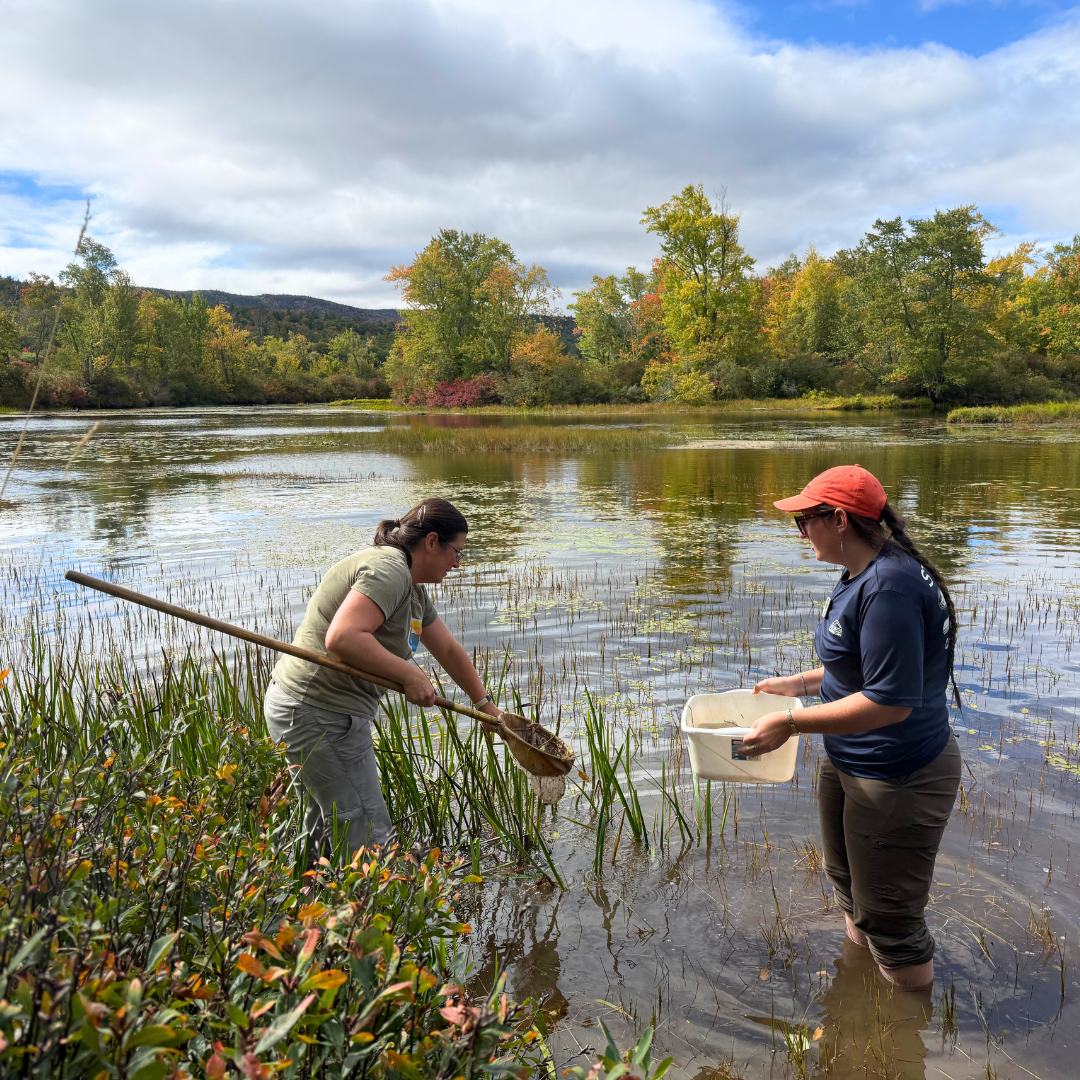
NLRA is partnering with the Merrimack Dragonfly Mercury Project to examine mercury levels in the Newfound Watershed, adding another layer to our long-term water quality monitoring initiatives.
How Mercury Moves Through the Food Chain
Mercury in New Hampshire lakes primarily comes from burning waste and fossil fuels. It falls to the ground in rain and snow and collects in our streams, rivers, and lakes. Once it’s in our waterways, it is converted by algae and bacteria into the harmful neurotoxin methylmercury. Aquatic organisms become contaminated with methylmercury when they feed on that algae and bacteria and mercury continues to move up the food chain, becoming more concentrated in larger organisms. In humans, mercury exposure can lead to health problems and learning disorders. It also affects apex predators that consume fish like loons and eagles.
Why Dragonfly Nymphs?
The Merrimack Dragonfly Mercury Project measures mercury levels in dragonfly nymphs (the aquatic larvae of dragonflies) to assess mercury pollution across the Merrimack Watershed, including the Newfound Watershed. Dragonfly nymphs are a great way to monitor mercury levels because they spend their entire larval stage in the water, don’t travel big distances, and, as predators, bioaccumulate mercury from their prey.
A Closer Look at Newfound
In September NLRA staff and volunteers headed to Newfound’s largest tributaries, the Cockermouth and Fowler Rivers, to collect dragonfly nymphs that will give us a clearer picture of Newfound’s mercury levels. Mercury in the collected nymphs will be measured at Dartmouth College, along with samples from other locations in the Merrimack River Watershed, to get a sense of mercury levels in aquatic ecosystems. This effort is part of a larger, nation-wide project to monitor mercury levels and protect human health and the environment.
Learn more by visiting The Merrimack Dragonfly Mercury Project and the nationwide Dragonfly Mercury Project.