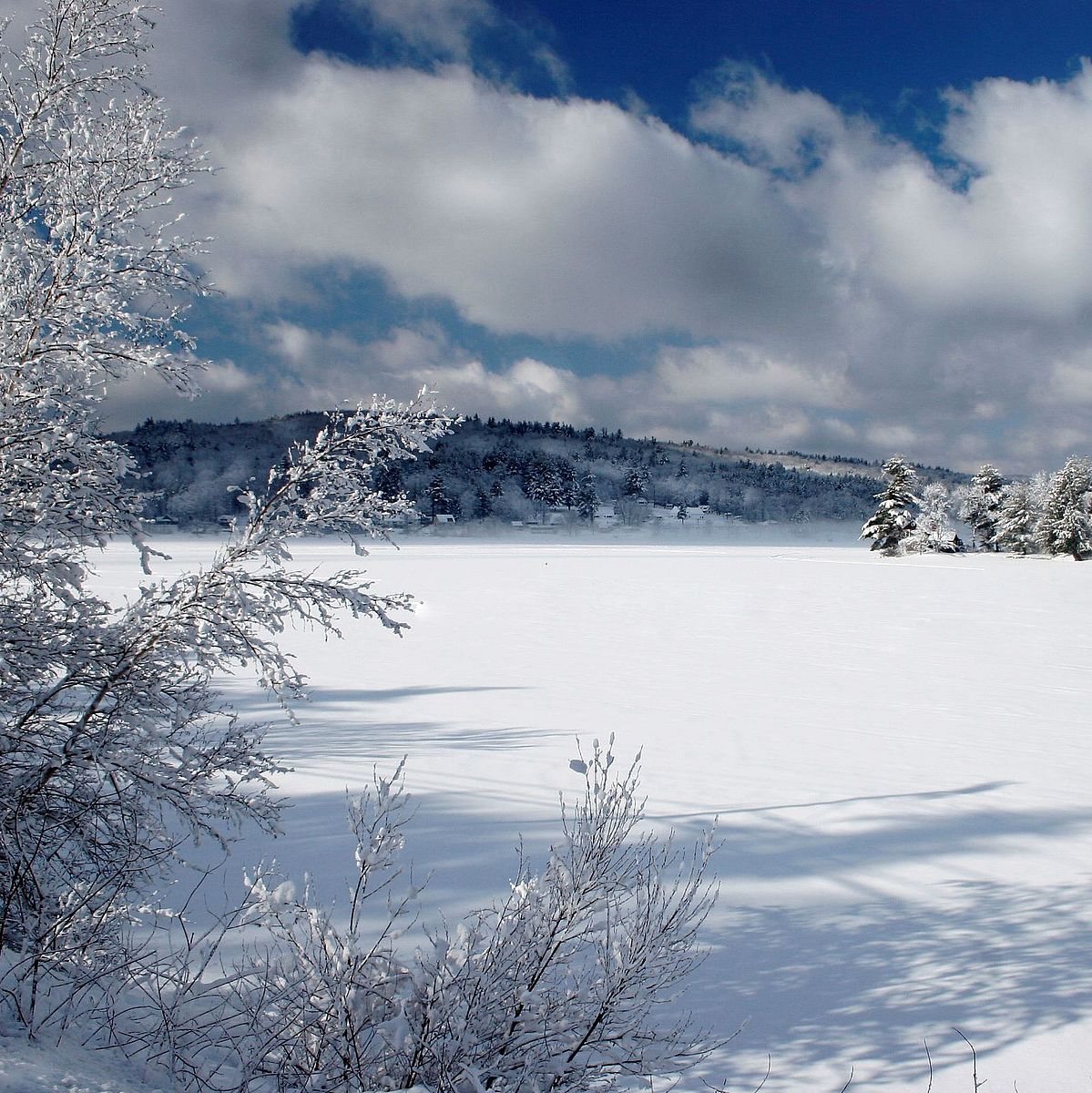
The lake was fully covered by ice beginning January 3rd, the earliest ice-in date since 2019. Along with recreational opportunities, ice cover plays an important role in keeping Newfound Lake healthy.
Data from the Global Lake and River Ice Phenology Database, some of which is graphed here by the EPA, shows a trend of ice-in dates occurring later and ice-out dates occurring earlier. Researchers at York University have looked at almost 80 years of lake ice data from the National Snow and Ice Data Center and found that the frequency of ice-free winters on lakes in the northern hemisphere has more than tripled since 1978.
Ice cover supports a healthy lake by:
- Buffering shorelines from winter waves, minimizing winter erosion.
- Decreasing the chance of toxic cyanobacteria blooms.
- Protecting native species habitat and plant and animal life cycles, especially some fish species, that are sensitive to temperature.
- Slowing the growth of algae and aquatic plants.
Consistent ice cover is more than a seasonal milestone, it’s a key indicator of lake health in a changing climate. Monitoring ice trends is an important way to understand how climate change is affecting Newfound Lake and to guide efforts to protect its long-term health.