Newfound Terrestrial Invasive Plants: What are they, why do we care, and how can I help?
by Blake Robbins, NLRA Volunteer
If you have found your way to this article, I first want to thank you for your interest in invasive species impacting Newfound Lake. This is a growing problem that can negatively affect the watershed and water quality. I have dedicated many hours to studying this issue around the lake. While countless volunteers have worked tirelessly to prevent aquatic invasive species, my effort was the first of its kind to identify terrestrial invasive plant species along the shoreline. It truly is a “new-found” problem.

So what are terrestrial invasive plants?
The USDA defines terrestrial invasive plants as: “Non-native plants (members of the kingdom Plantae) that grow in non-aquatic habitats, including agricultural fields, rangelands, forests, urban landscapes, wildlands, and along waterways. Terrestrial invasive plants include trees, shrubs, vines, grasses and herbaceous plants.”
That’s a lengthy description. In simpler terms: harmful land-based plants that are not native to North America.
In my study, I chose to focus on Japanese Knotweed (Fallopia japonica) and Asiatic Bittersweet (Celastrus orbiculatus) due to their unusually aggressive behavior and significant impacts on water quality. There are many other terrestrial invasive plants affecting our landscapes and ecosystems, but these two stand out along the Newfound shoreline.
Why Do We Care?
Knotweed’s Impact
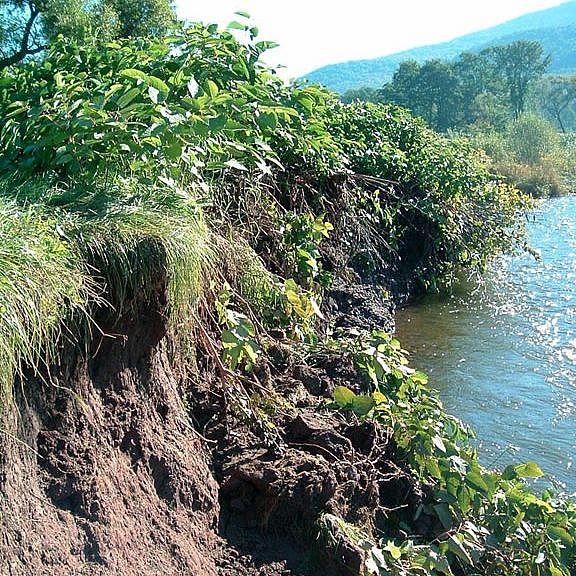
Knotweed is classified as an extremely invasive species. If it’s on your property, it can be a long-term battle. It spreads prolifically, grows rapidly (up to 4 inches per day), and outcompetes native plants before they can establish. It forms dense monocultures and dies back in winter, leaving exposed soil vulnerable to erosion. It is also allelopathic, meaning it releases chemicals that inhibit the growth of nearby native plants.
Removal is difficult due to seasonal bi-directional nutrient flow and extensive rhizomes. These rhizomes can grow up to 10 feet deep and extend 40 feet outward, remaining dormant for years. Knotweed can regenerate from rhizome fragments as small as ½ inch. If you see a visible clump, assume its root system extends far beyond it.

Bittersweet’s Impact
Bittersweet is another aggressive species throughout our landscape. This fast-growing vine can strangle host trees or weigh them down, snapping limbs or toppling entire trees. Even mature oaks and pines are vulnerable. Each vine can grow up to 60 feet high.
Every downed tree creates an opportunity for excess nutrients to enter the lake. Bittersweet spreads by seed, rhizomes, and root suckers. It is difficult to control due to prolific seed production, vigorous resprouting, and root systems that can extend up to 13 feet in radius.
The Scope of the Problem
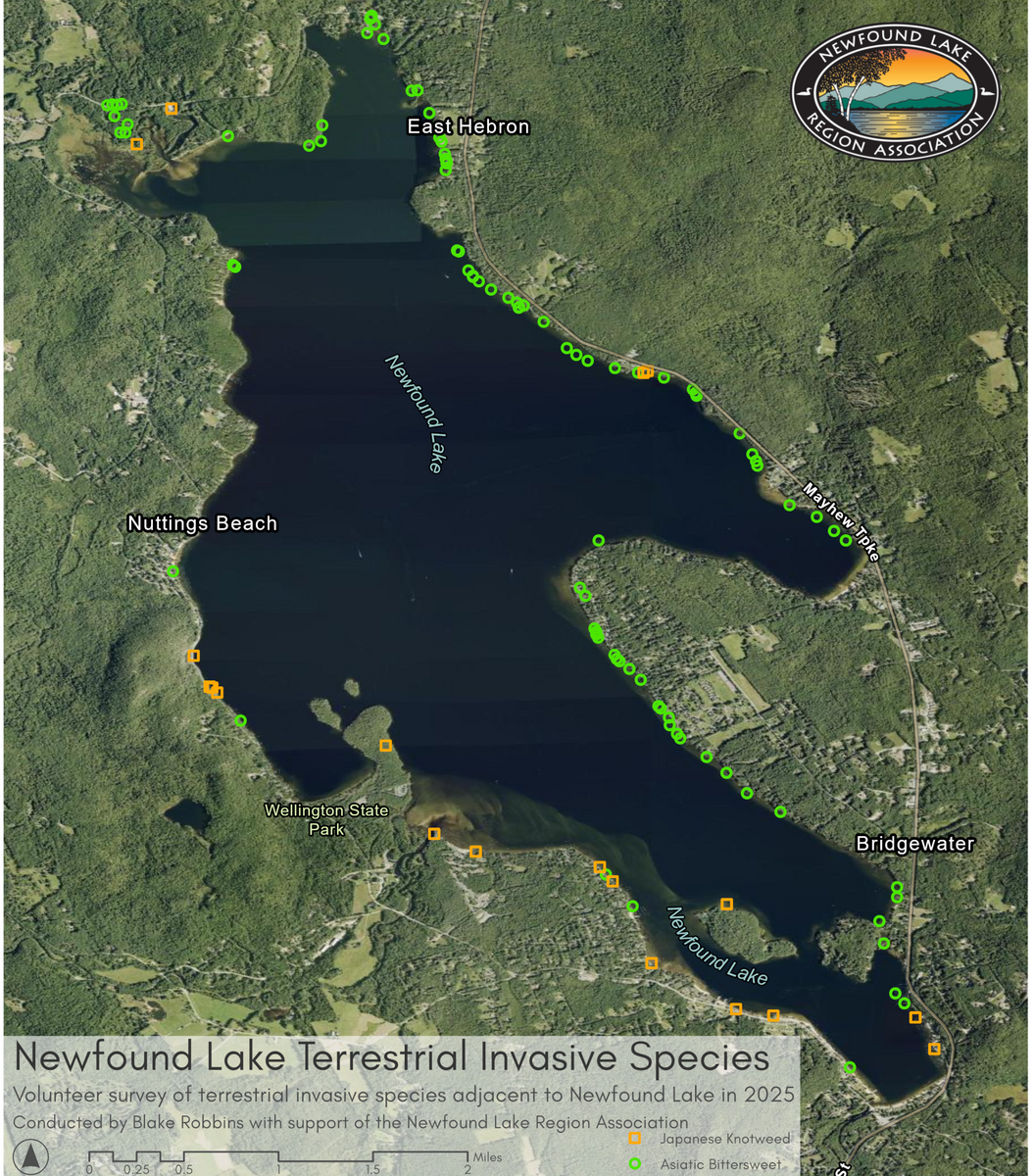
Another way to understand why we should care is by looking at the scale of impact. I documented 93 instances of Bittersweet and 19 instances of Knotweed along the lakeshore and river sections. Each Bittersweet occurrence could impact approximately 26 feet of shoreline, up to 2,418 feet total. Each Knotweed occurrence could impact 40-120 feet, up to 2,280 feet total. Combined, that represents as much as 4,698 linear feet of shoreline at risk—nearly a mile. And this estimate does not account for future spread by seed, rhizome, or broken stems. These species are prolific. The time to act is now.
How Can I Help?
The most important thing you can do is follow the three-step process of Identify, Control, and Reduce.
Step 1: Identify
How do we recognize each species?
Below are descriptions of their physical traits, along with resources to help you identify them in the field.
Japanese Knotweed
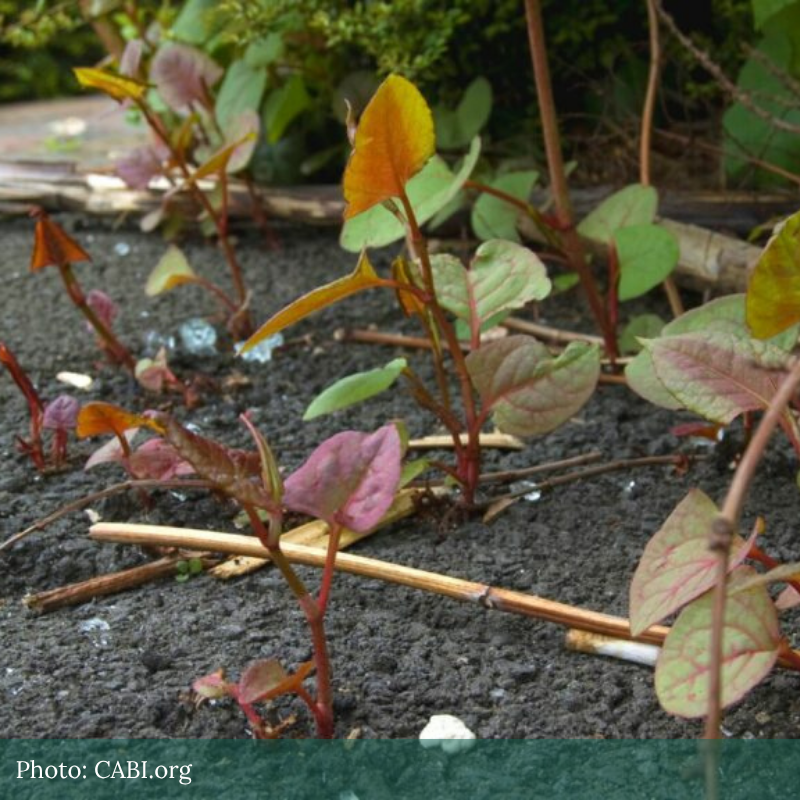
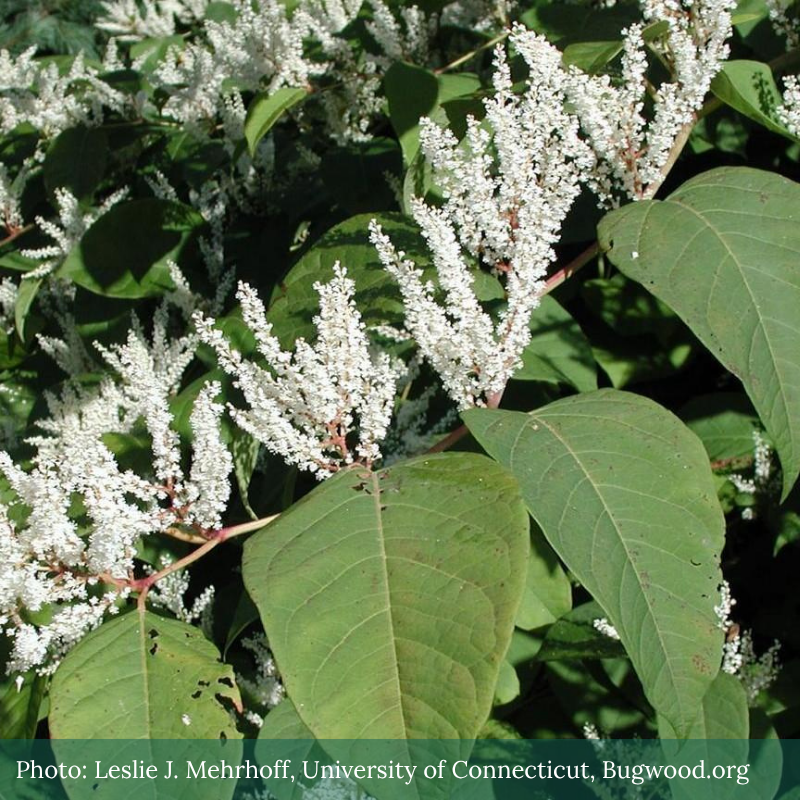
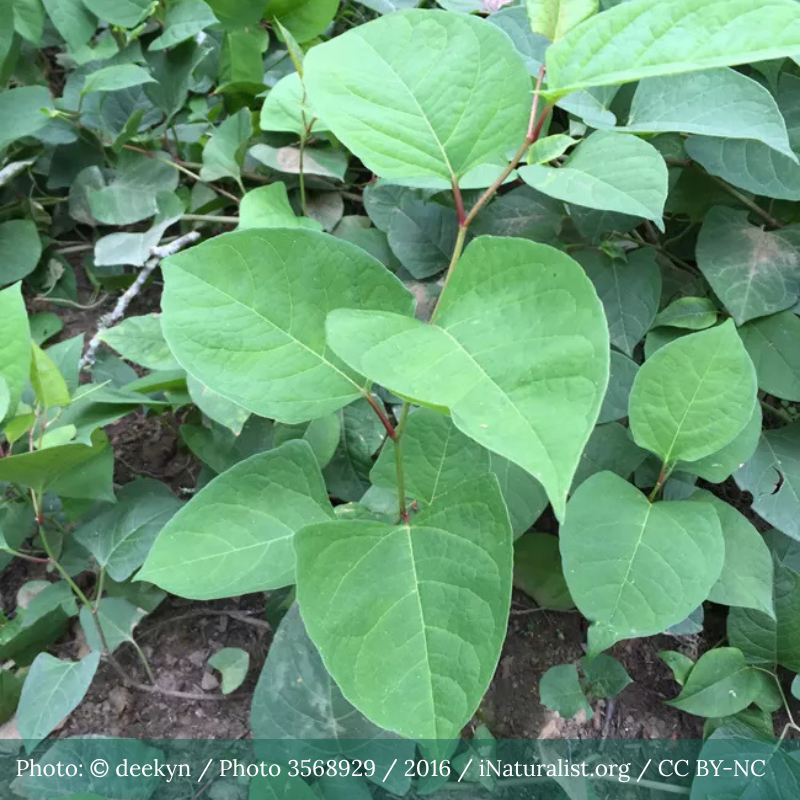
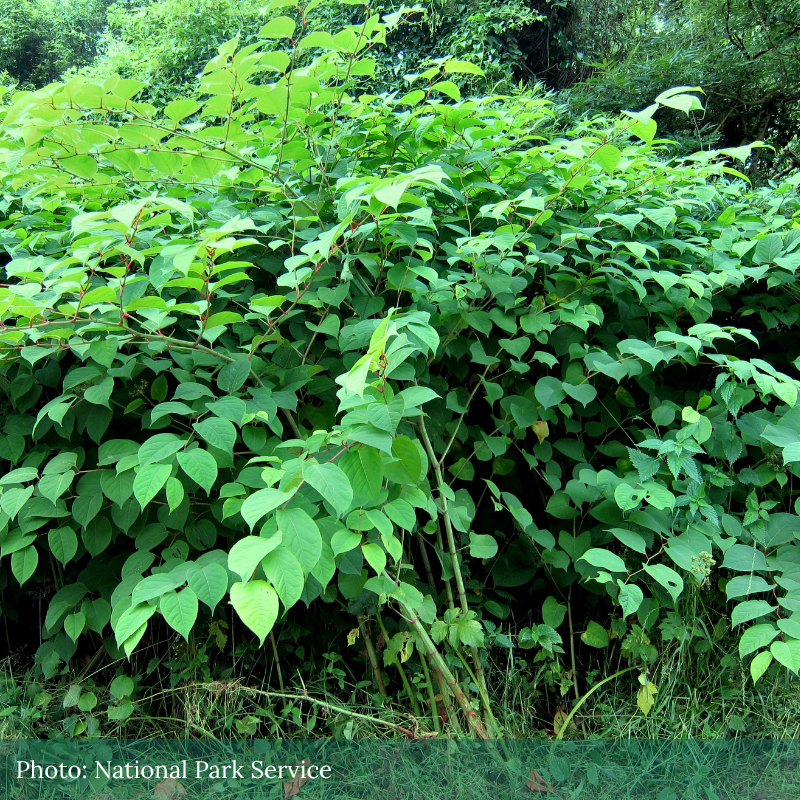
Japanese knotweed is a tall, upright perennial shrub with a large rhizomatous root system and hollow stems. The rhizomes have an orange interior similar in color to a carrot. New spring shoots resemble asparagus with a reddish hue.
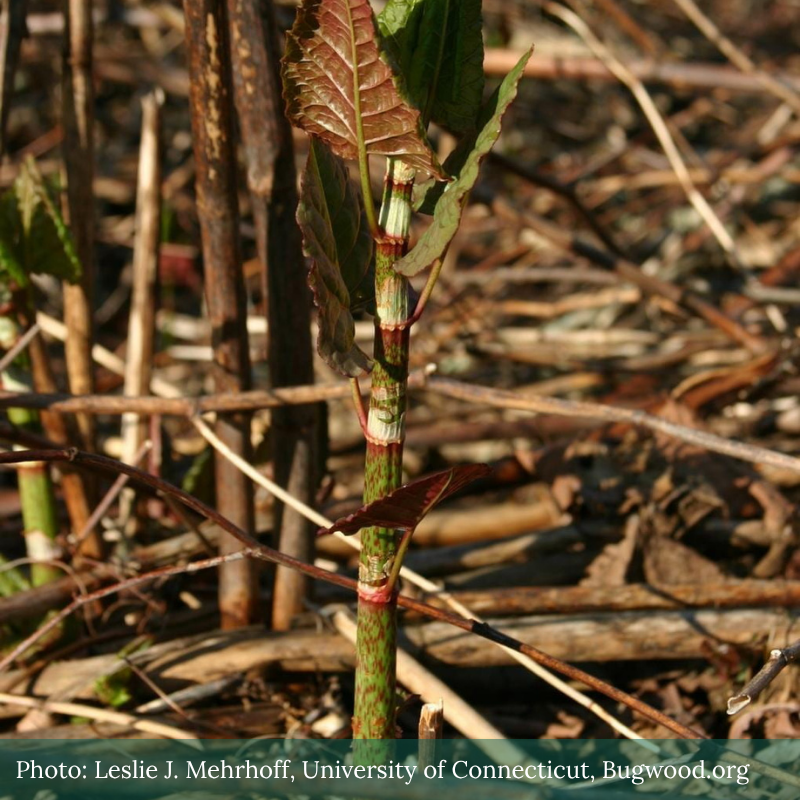
Stems can reach up to 10 feet (3 m) tall and are hollow with distinct joints (nodes), similar to bamboo. Leaves alternate along the stem and are spade-shaped (broadly ovate with a flat or truncate base). Creamy white, lacy flowers (small white to off-white racemes/panicles) emerge in late summer. Pollinated flowers form triangular, winged seed pods.
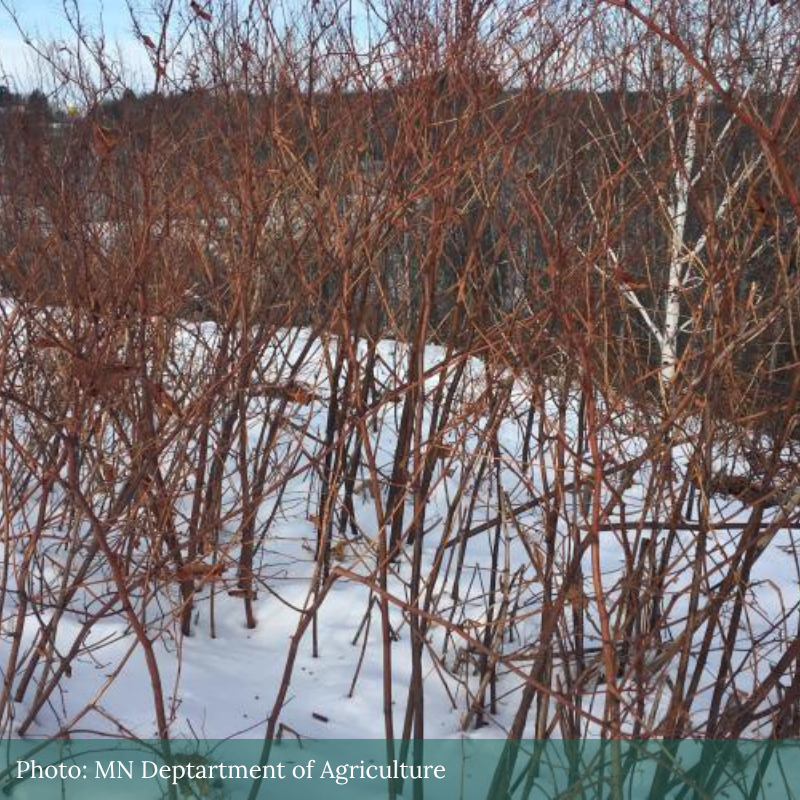
In fall, leaves turn yellow to orange, often earlier than native shrubs. The hollow stems persist through winter, taking on a reddish hue.
The NH Department of Agriculture fact sheet is an excellent field reference:
https://mm.nh.gov/files/uploads/agriculture/documents/japanese-knotweed.pdf
Click each image to enlarge it.
Asiatic Bittersweet
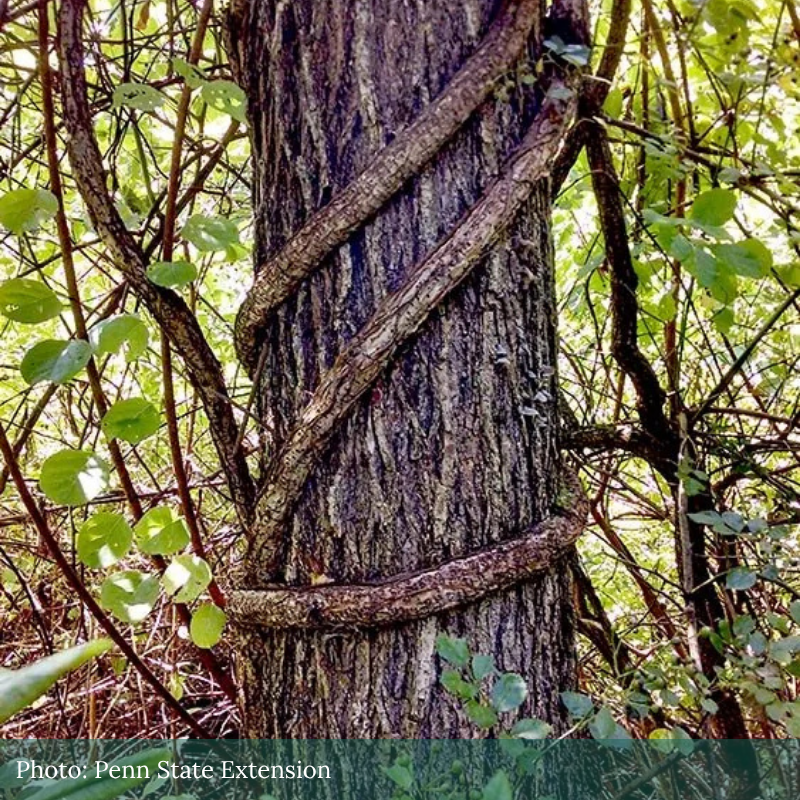
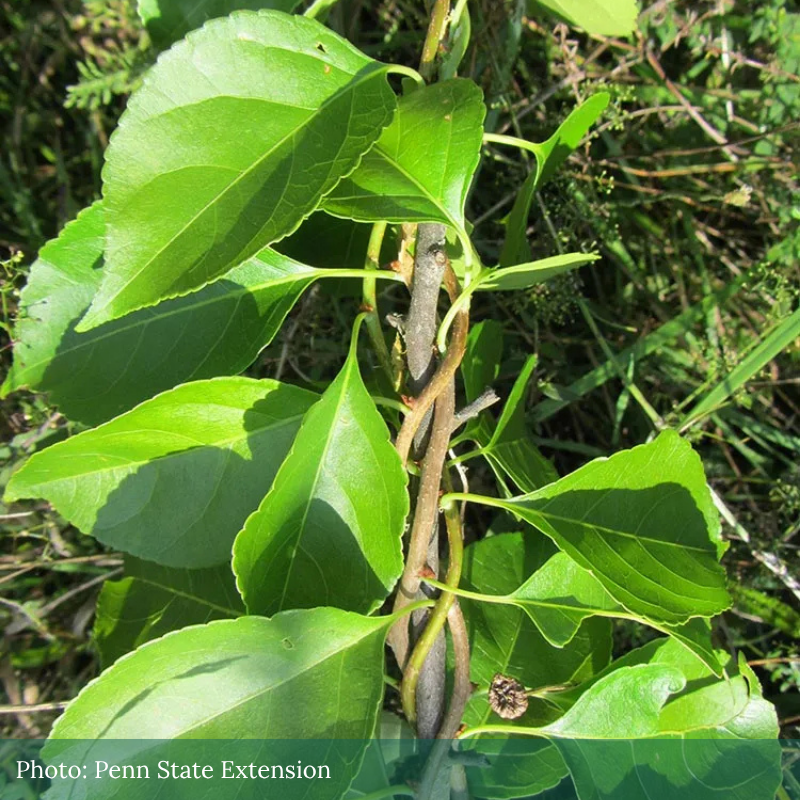
Asiatic bittersweet is a deciduous woody vine that can grow up to 60 feet (18 m) high. Young vines are green; mature vines may reach four to six inches in diameter and develop tan, furrowed bark. Unlike poison ivy, the vines are not hairy.
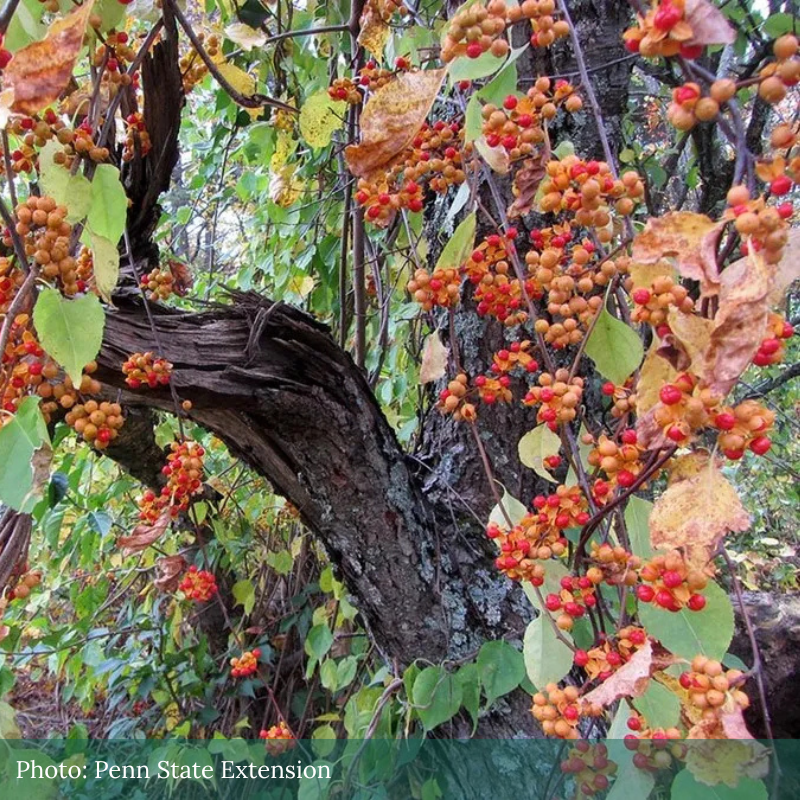
Leaves are alternate and elliptical to round with a pointed tip. Small green, four-petaled flowers appear in May to June at leaf axils. Fruit casings begin green and mature to yellow, eventually splitting open to reveal bright red berries that persist through winter.
The foliage turns yellow to orange later in the fall than most native tree species, which can make identification easier.
The NH Department of Agriculture fact sheet is a helpful printable guide:
https://mm.nh.gov/files/uploads/agriculture/documents/oriental-bittersweet.pdf
Click each image to enlarge it.
Step 2: Control
Controlling means preventing further spread by seeds, roots, or rhizomes. Now that you know how to identify these species, you can take action to avoid inadvertently spreading them. The fact sheets I linked to above, along with the control resources below, provide guidance on specific actions you can take.
Step 3: Reduce
Reducing involves the physical removal or destruction of these species. There are both mechanical and chemical methods available to landowners.
Please note: The NH Shoreland Protection Act regulates the application of chemicals within 250 feet of protected water bodies.
UNH Extension provides excellent resources:
Mechanical Control:
https://extension.unh.edu/sites/default/files/migrated_unmanaged_files/Resource008196_Rep11955.pdf
Chemical Control:
https://extension.unh.edu/sites/default/files/migrated_unmanaged_files/Resource008197_Rep11956.pdf
Thank you again for your interest in terrestrial invasive plants. Together, we can make a meaningful impact in protecting and improving the health of the Newfound Lake watershed and preserving its water quality for generations to come.
