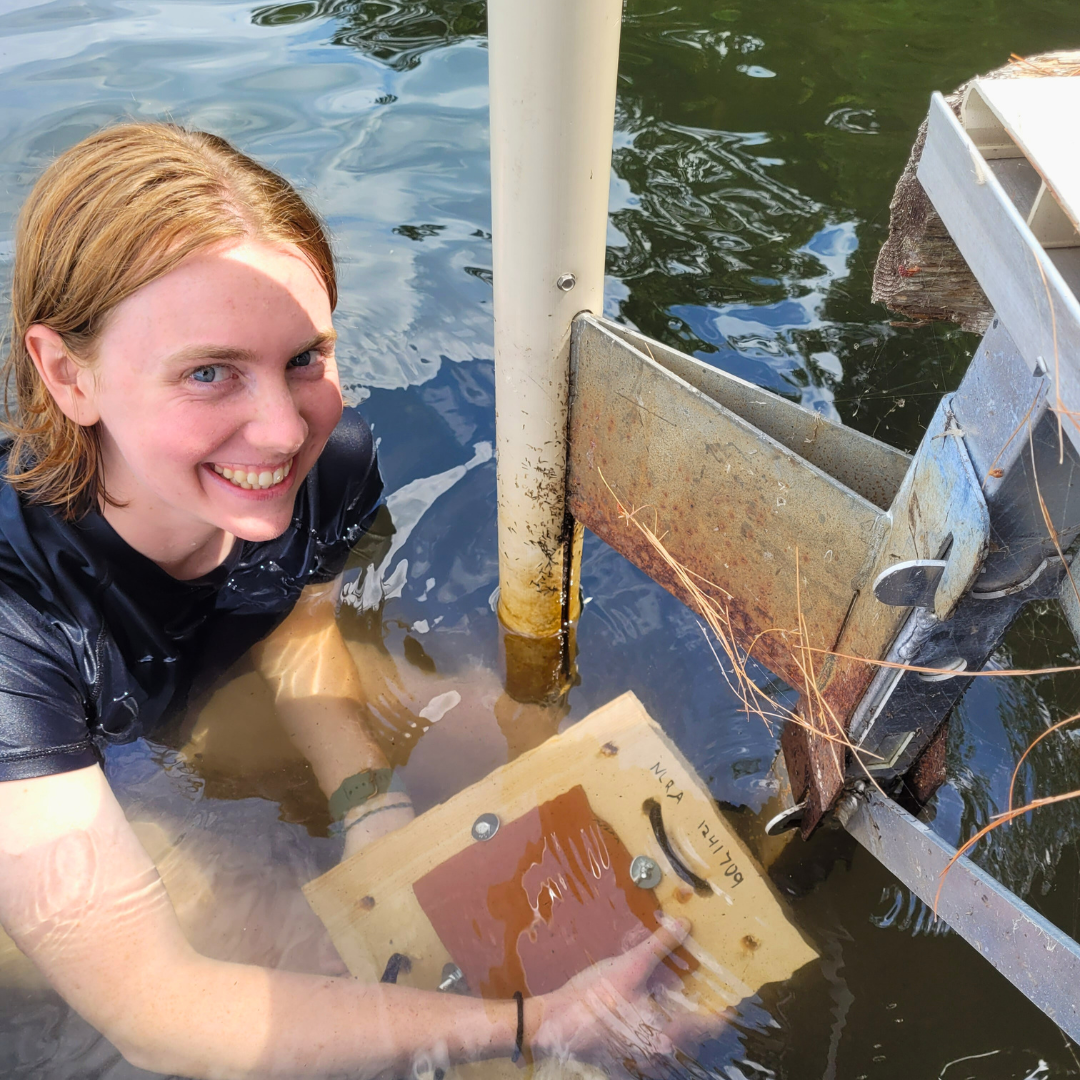
By monitoring algae growth along the shoreline, NLRA gains valuable insight into water quality, nutrient levels, and the impacts of stormwater runoff.
While deep-water monitoring helps us understand overall lake health, nearshore areas often respond more quickly to environmental stressors such as stormwater runoff, warmer temperatures, and nutrient pollution.
Through NLRA's nearshore monitoring efforts, small clay tiles are attached to dock posts below the water's surface throughout the summer. Algae naturally grows on the tiles, providing a measurable way to compare nutrient levels and water quality around the lake. More algae growth can indicate higher nutrient inputs, often associated with stormwater runoff from developed areas.
Launched in 2024, nearshore monitoring has already documented large differences in algae growth from year to year and between sampling locations. These findings helps NLRA better understand how shoreline conditions vary around the lake and informs efforts to protect water quality where it may be most at risk.
Over time, nearshore monitoring will help us identify trends, detect potential problems early, and make science-based decisions about lake protection. Combined with our long-term water quality monitoring efforts, it provides a more complete picture of Newfound Lake's health.
Help Advance This Important Research
We're currently seeking shoreline property owners willing to host a monitoring tile on their dock this summer. Participation is simple and the information collected helps build a clearer understanding of Newfound Lake while supporting future conservation efforts.
Interested in participating? Contact NLRA at (603) 744-8689 or email: info@newfoundlake.org to learn more.