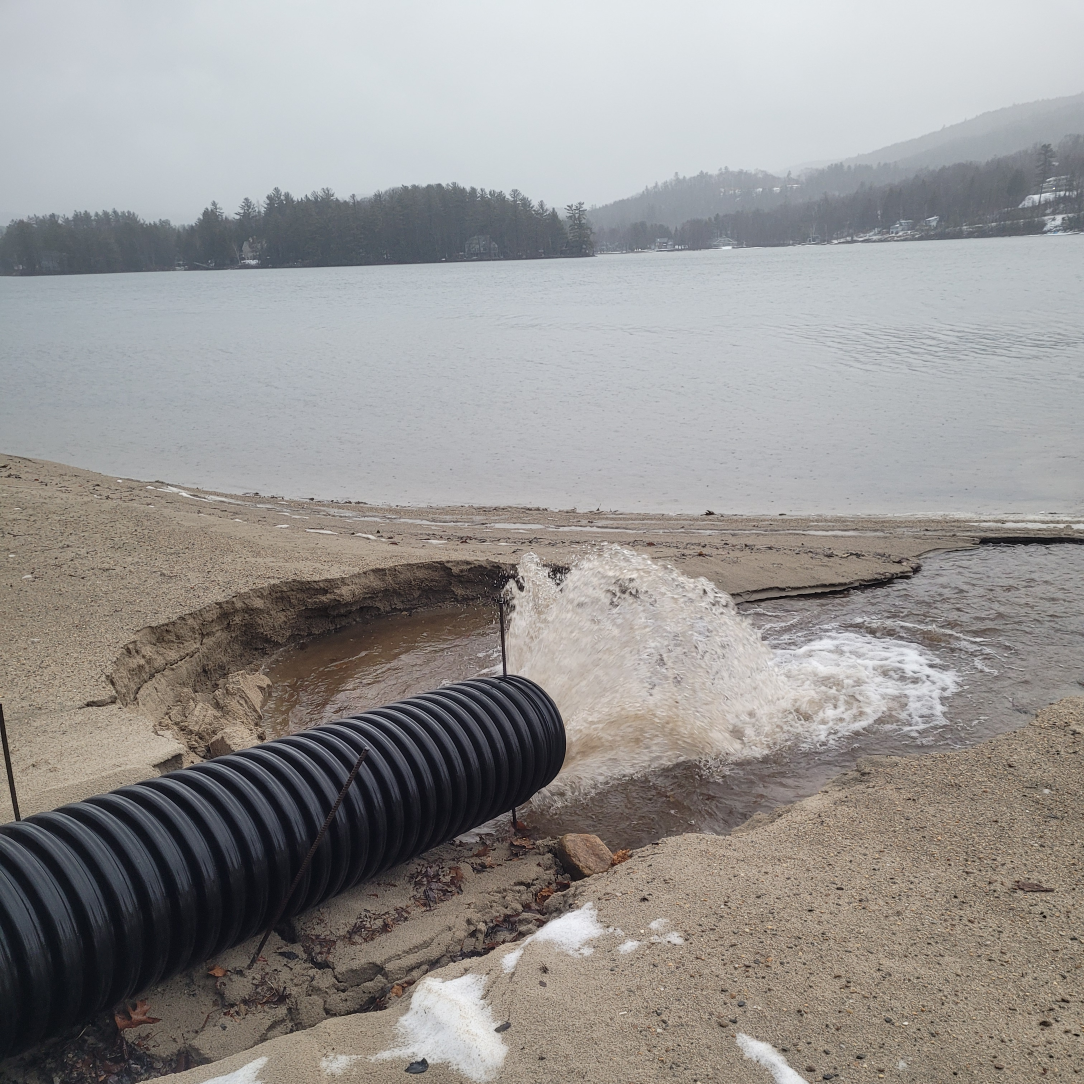
After weeks of cold and snow, the Newfound Watershed experienced warmer temperatures and rain. Winter rainstorms come with unique challenges, especially when rain falls on snow or frozen ground.
In warmer months, soil soaks up rain like a sponge and growing plants take up large quantities of water through their roots. This slows runoff and helps prevent erosion and stormwater pollution. In winter, the ground is often frozen or already saturated with meltwater, and plants are dormant. With nowhere to soak in, rain flows quickly downhill as runoff.
As this fast-moving water travels across roads, driveways, and yards, it picks up sediment, pet waste, road salt, and other pollutants and carries them into the nearest waterbody. These pollutants harm water quality and aquatic life and increase the risk of flooding.
Winter adds another challenge: snowbanks along roads and ice in streams can block ditches and culverts, forcing water into new paths and increasing erosion and flood damage.
What You Can Do To Help Prevent Stormwater Runoff
Small actions in your backyard can make a big difference:
- Check culverts and ditches near your home and clear debris so water can flow freely.
- Direct roof runoff onto vegetation, gravel or into a dry well, not pavement or bare soil.
- Keep shoreline and stream buffers natural, using plants to slow and filter runoff.
- Watch for erosion during storms and address small problems before they grow.
NLRA has tools and resources to help homeowners reduce stormwater pollution. Learn more at NewfoundLake.org/small-scale-stormwater.